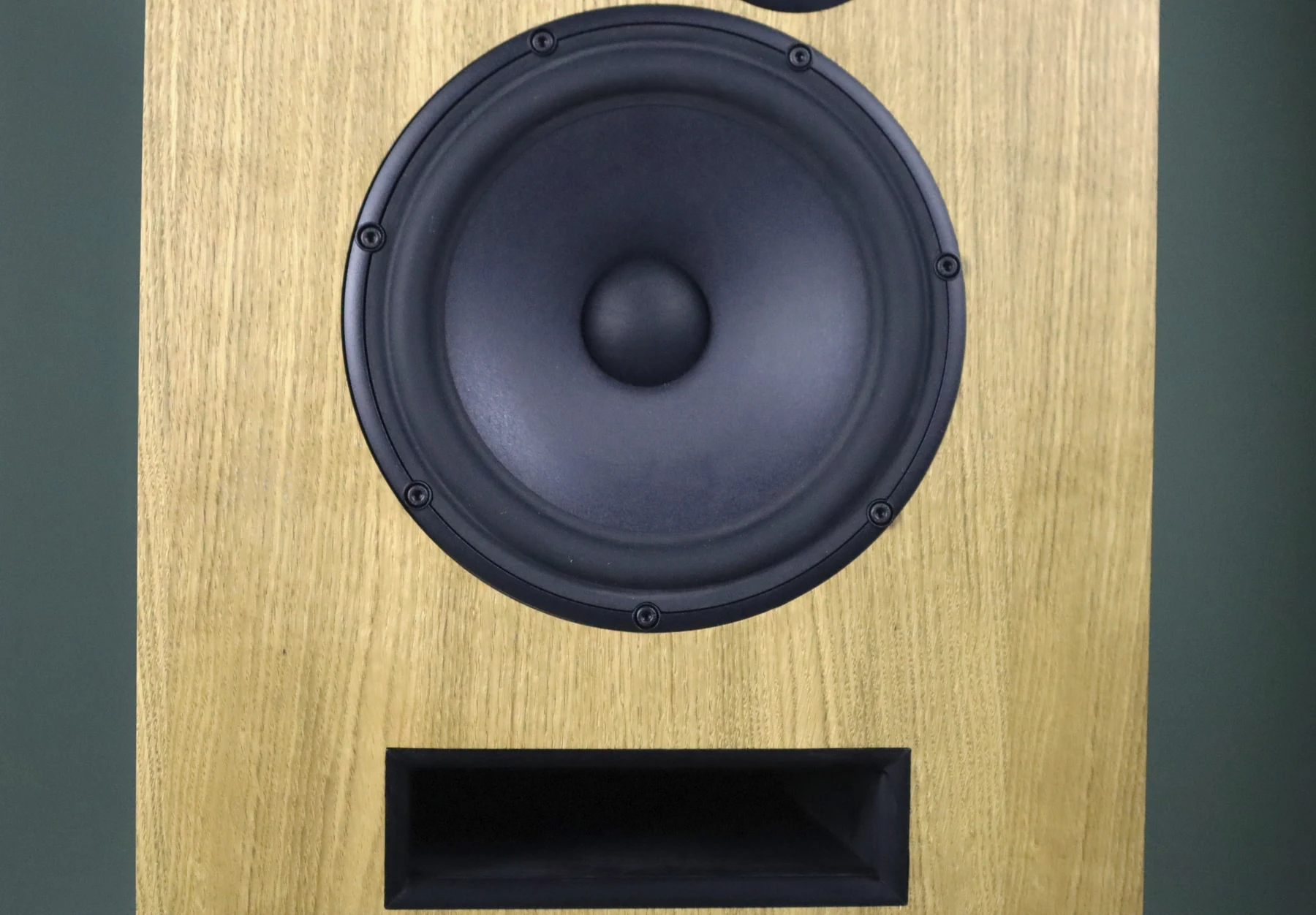
Low frequencies
Felt as well as heard.
A generous enclosure, large driver and low-tuned front port provide depth without the one-note boom that often gives bass a bad name.
Independent loudspeaker design · Yorkshire
MÆRE makes substantial loudspeakers from real wood, carefully chosen components and a lot of testing. They are built to play quietly with detail, loudly without strain, and to reproduce proper bass without tricks.
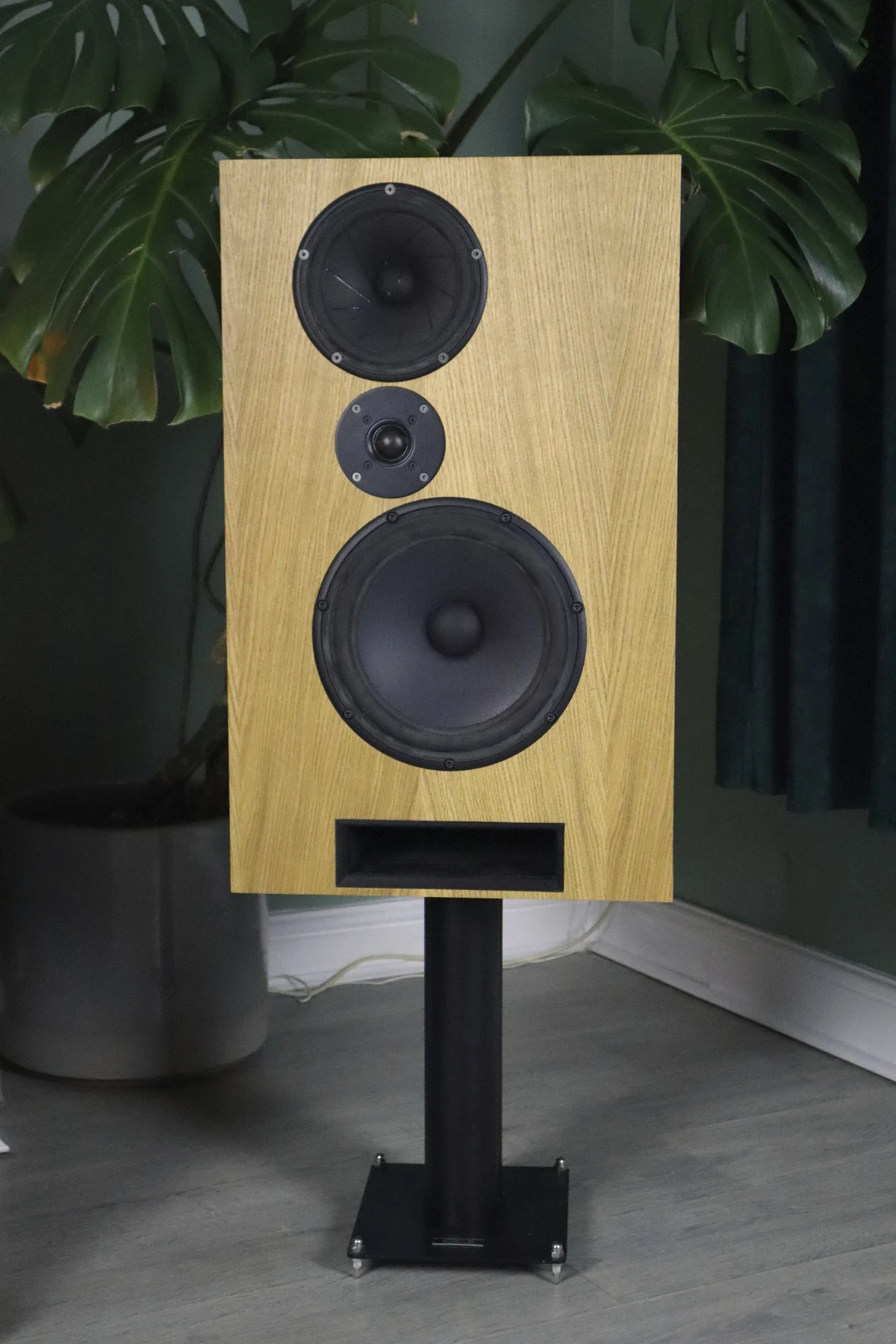
We wanted the ease and scale of a good large loudspeaker, but with clean modern drivers, careful crossover work and bass that reaches low without becoming slow or bloated. Most of what we found was smaller, more restrained, or far more expensive than the parts and construction seemed to justify.
MÆRE keeps the work close to the product. Cabinet construction, finishing, crossover assembly, measurement and final voicing are carried out directly by the company. There is no badge on the front and no attempt to make the loudspeaker look smaller than it is.
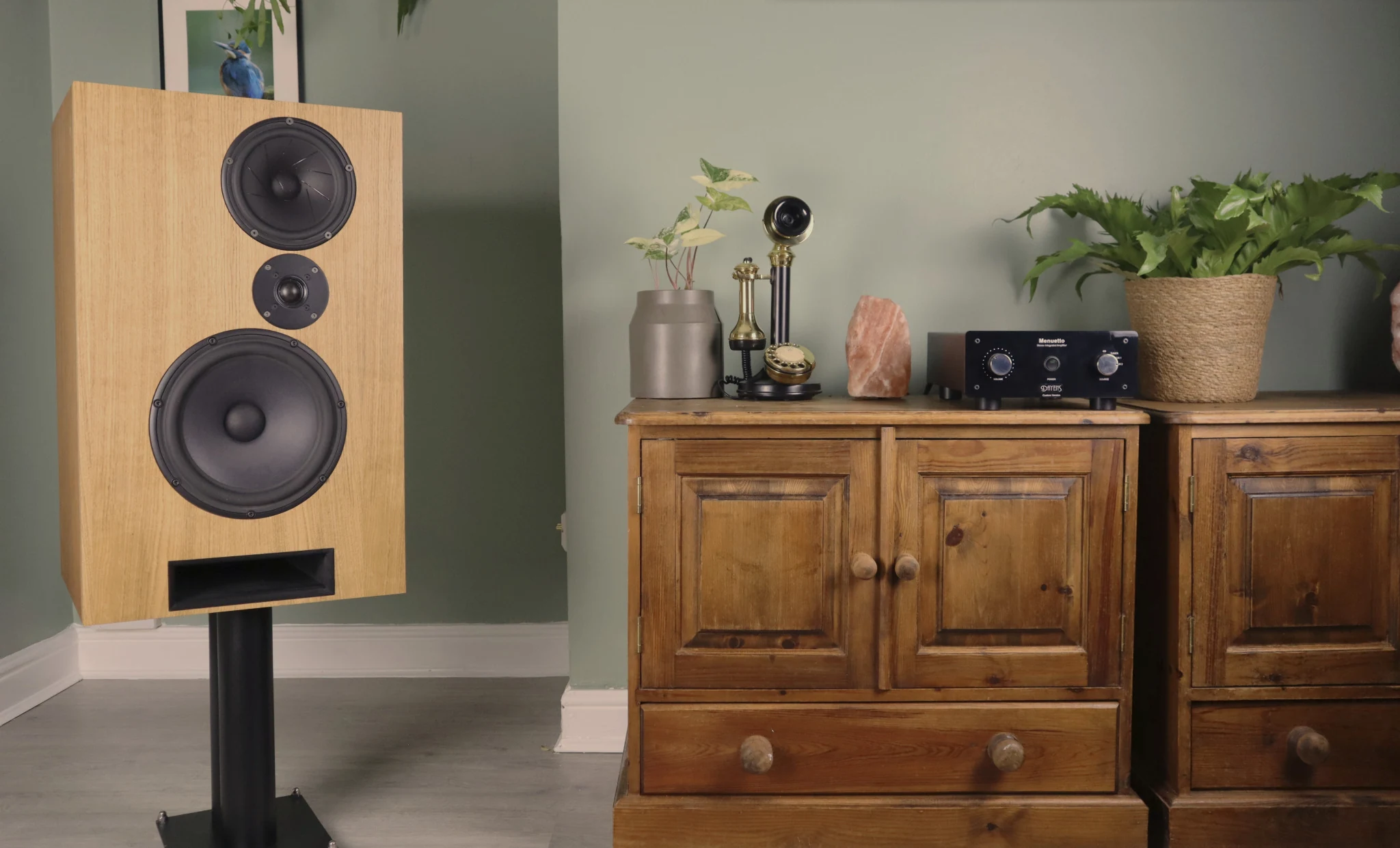
Designed by measurement.
Finished by listening.
Measurements get the design where it needs to be. Then we live with it. Every loudspeaker is played with different music, at different levels, in different positions and in more than one room. We try to catch it out. When it stops drawing attention to itself and leaves us wanting another record, it is finished.
Flagship three-way loudspeaker
Cwen is for listeners who still want their loudspeakers to move air, fill a room and reproduce the full weight of a recording.
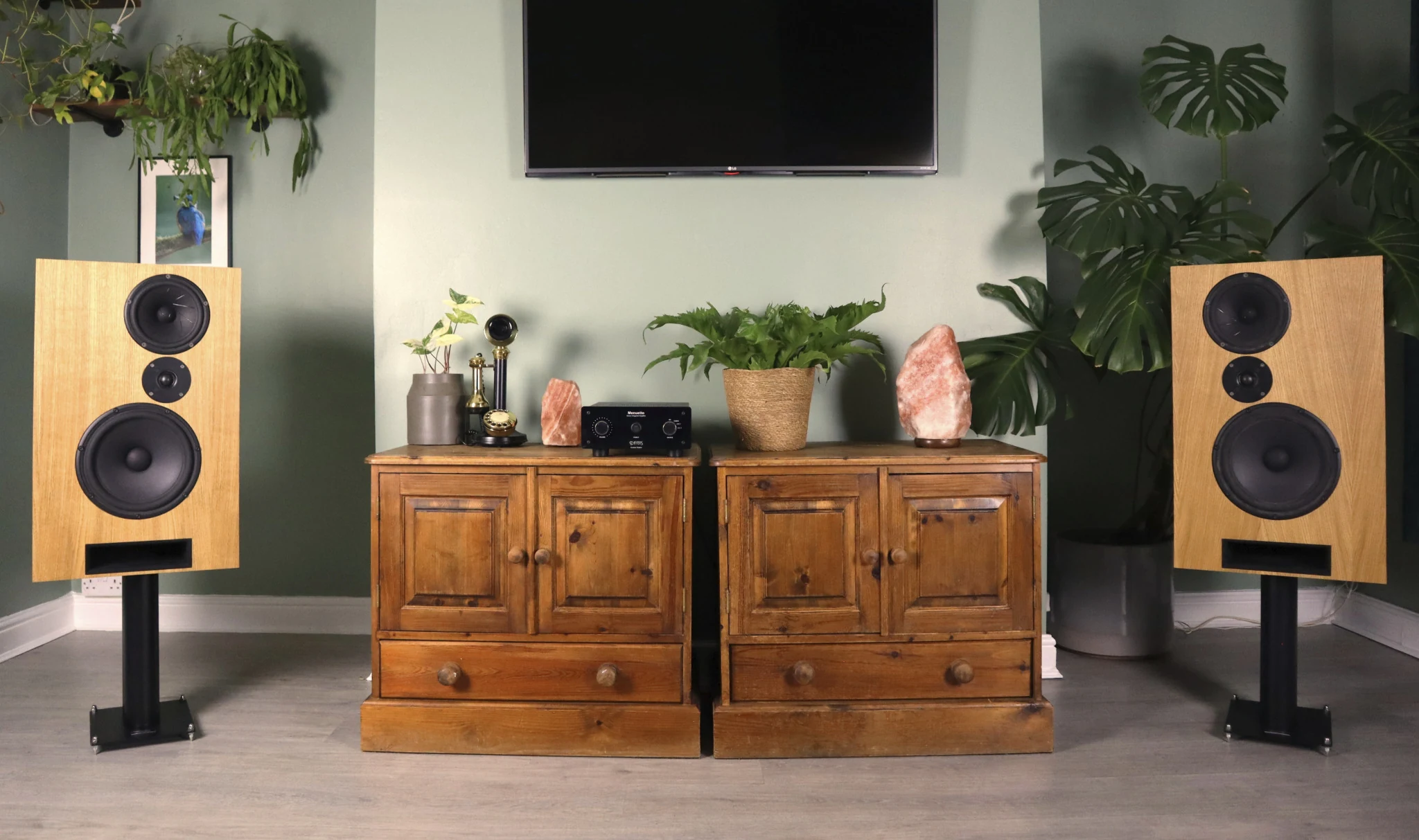
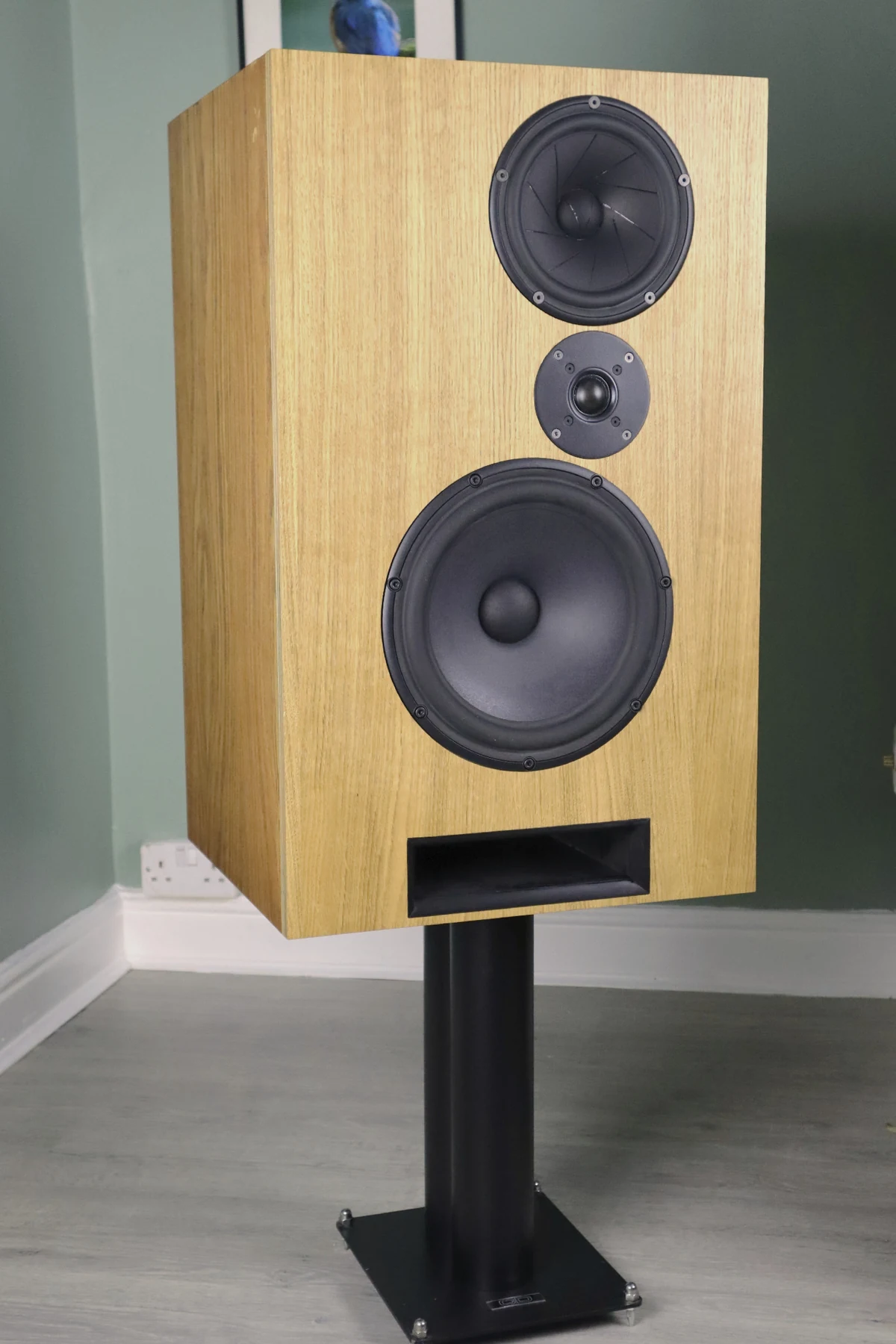
Cwen combines a large 10-inch bass driver, a dedicated sliced-paper midrange and a soft-dome tweeter. The bass system is tuned low rather than boosted higher up to create an impression of weight. In-room output extends to around 22 Hz, so bass instruments keep their pitch, texture and physical presence.
The midrange works in its own sealed chamber, away from the changing pressure created by the bass driver. Voices stay stable and natural even when the loudspeaker is playing hard. At lower levels, the same balance remains intact.
Cwen is revealing. A flat, heavily compressed recording will still sound flat and heavily compressed. Give it a good recording and it can be intimate, delicate and beautifully quiet. Turn it up and it becomes something else entirely.
The low end should stay level with the rest of the music. A bass guitar should sound like a string being struck, not a tone added behind the band.
A generous enclosure, large driver and low-tuned front port provide depth without the one-note boom that often gives bass a bad name.
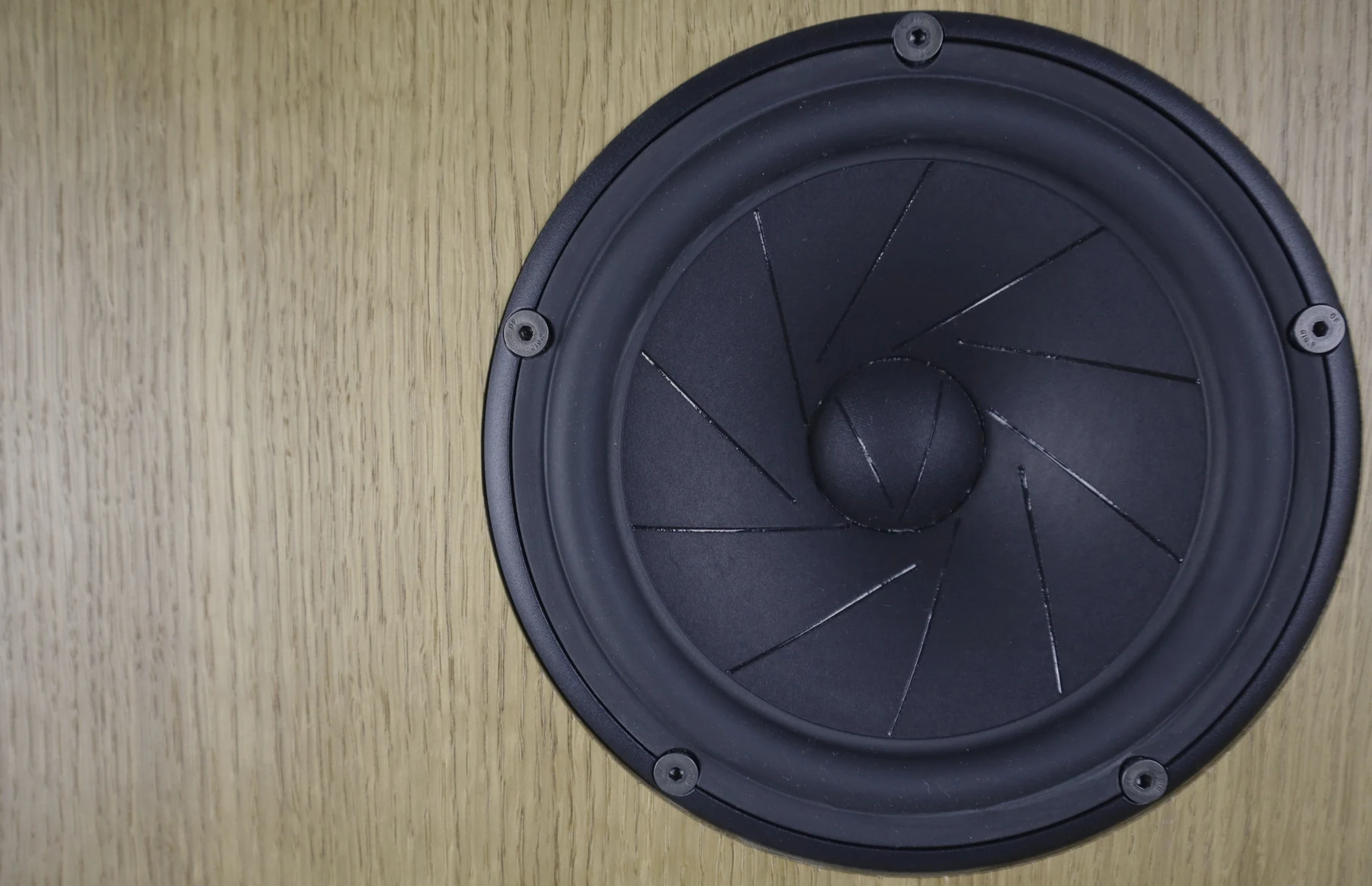
The dedicated midrange is where much of the music lives. Breath, movement and the body of an instrument remain easy to hear without being pushed forward.
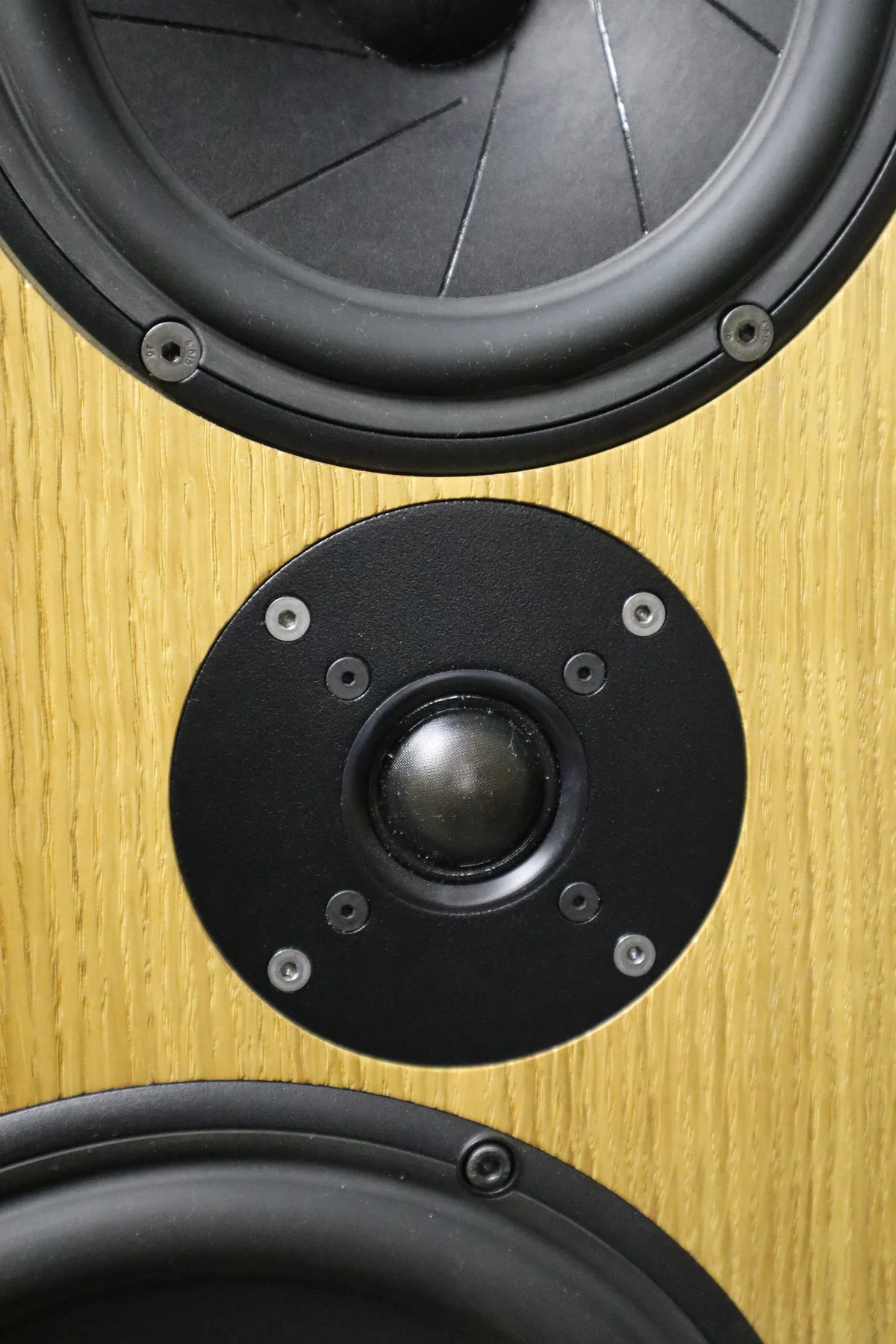
Cwen does not need to be played loudly to sound complete, but it stays clean and composed well past ordinary domestic levels.
Large drivers, generous cabinet volume and low-tuned ports are not new ideas. Modelling, measurement and careful off-axis testing let us use them with far more control.
What should the loudspeaker do? What room will it live in? What music will it play? The design starts there, not with a fashionable part or a target size.
Driver behaviour, enclosure volume, port tuning, baffle diffraction and crossover slopes are considered together.
Frequency response, impedance, acoustic integration and off-axis behaviour are checked repeatedly as the design changes.
Different rooms, different listeners and difficult music are used to expose problems. Approval is not the aim. Useful criticism is.
A note on measurements
Our current room is suitable for crossover development, near-field work, impedance testing and controlled polar measurements. It is not an anechoic chamber, so we will not present a perfectly smooth full-range graph and pretend the room is not part of it. Where measurements are published, the method and limits will be made clear.
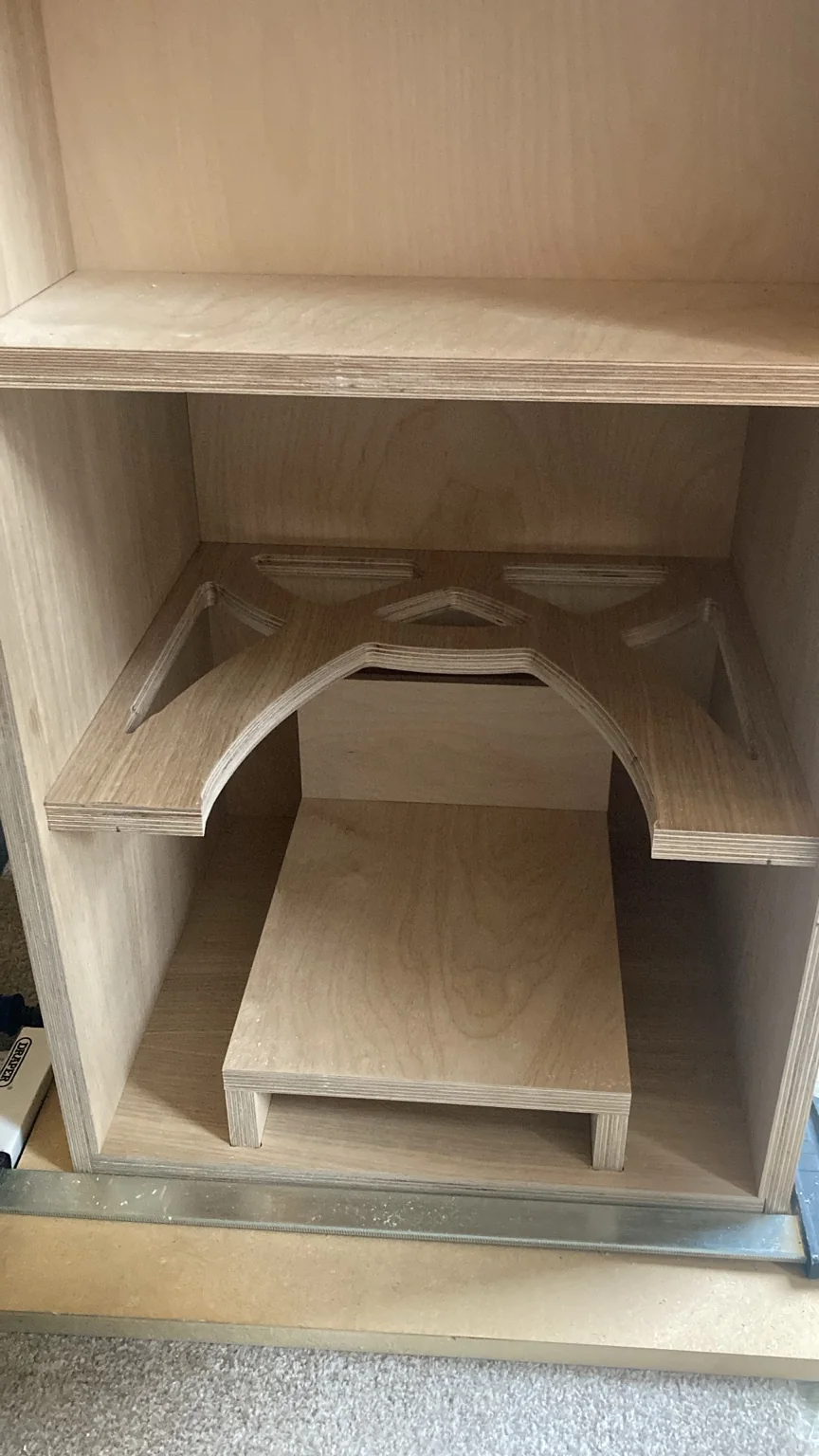
The cabinet is part of the acoustic design. Its volume, stiffness, damping and internal layout all affect what reaches the listener.
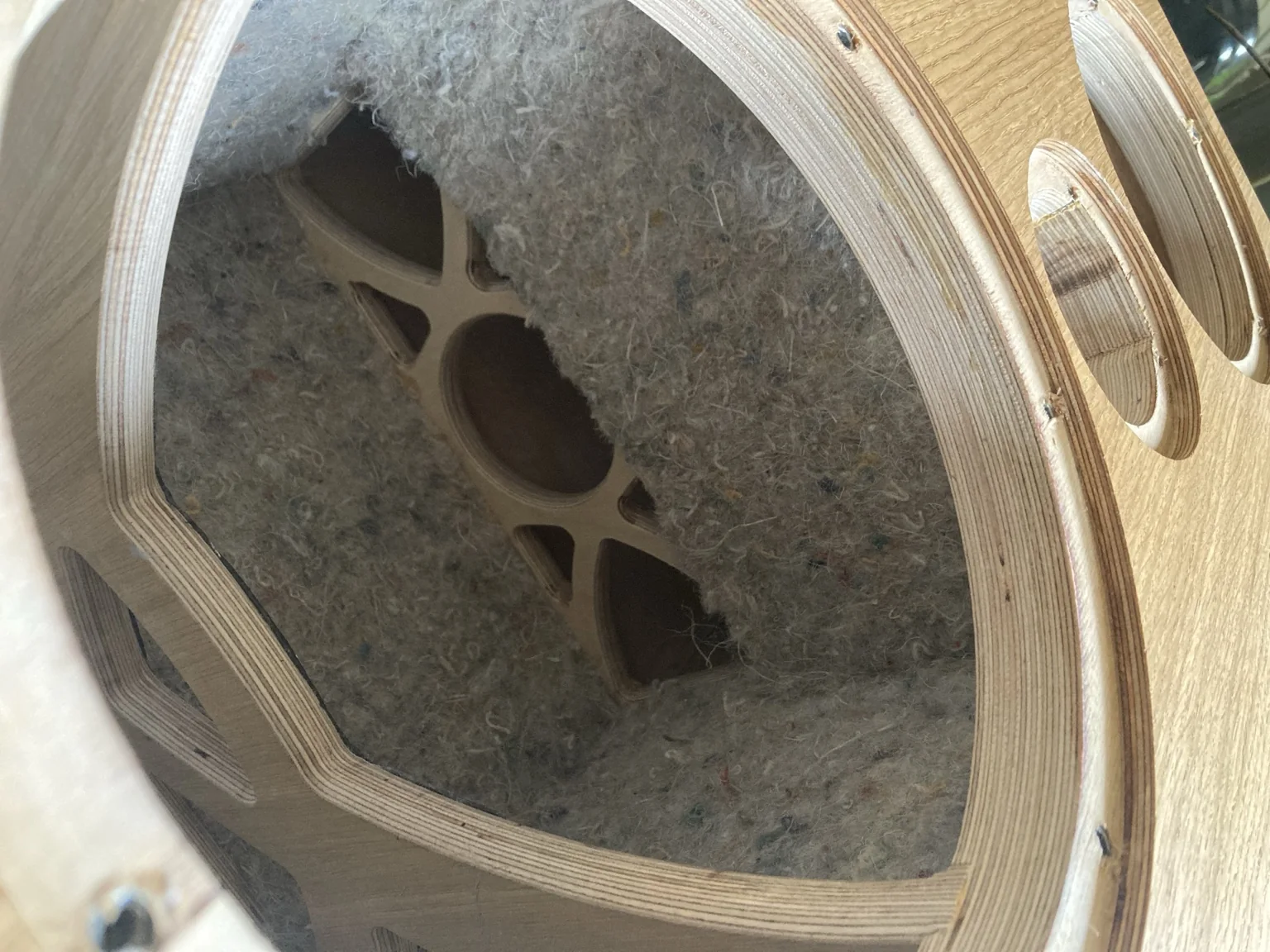
The enclosure uses substantial plywood construction, a thick front baffle and arched braces that tie the large panels together. The midrange sits in a separate sealed chamber. The bass driver works into a generous low-tuned volume with a large front slot port.
Natural wool felt and carded wool are used where they are useful. The crossover uses high-quality, low-loss parts selected for electrical performance rather than appearance.
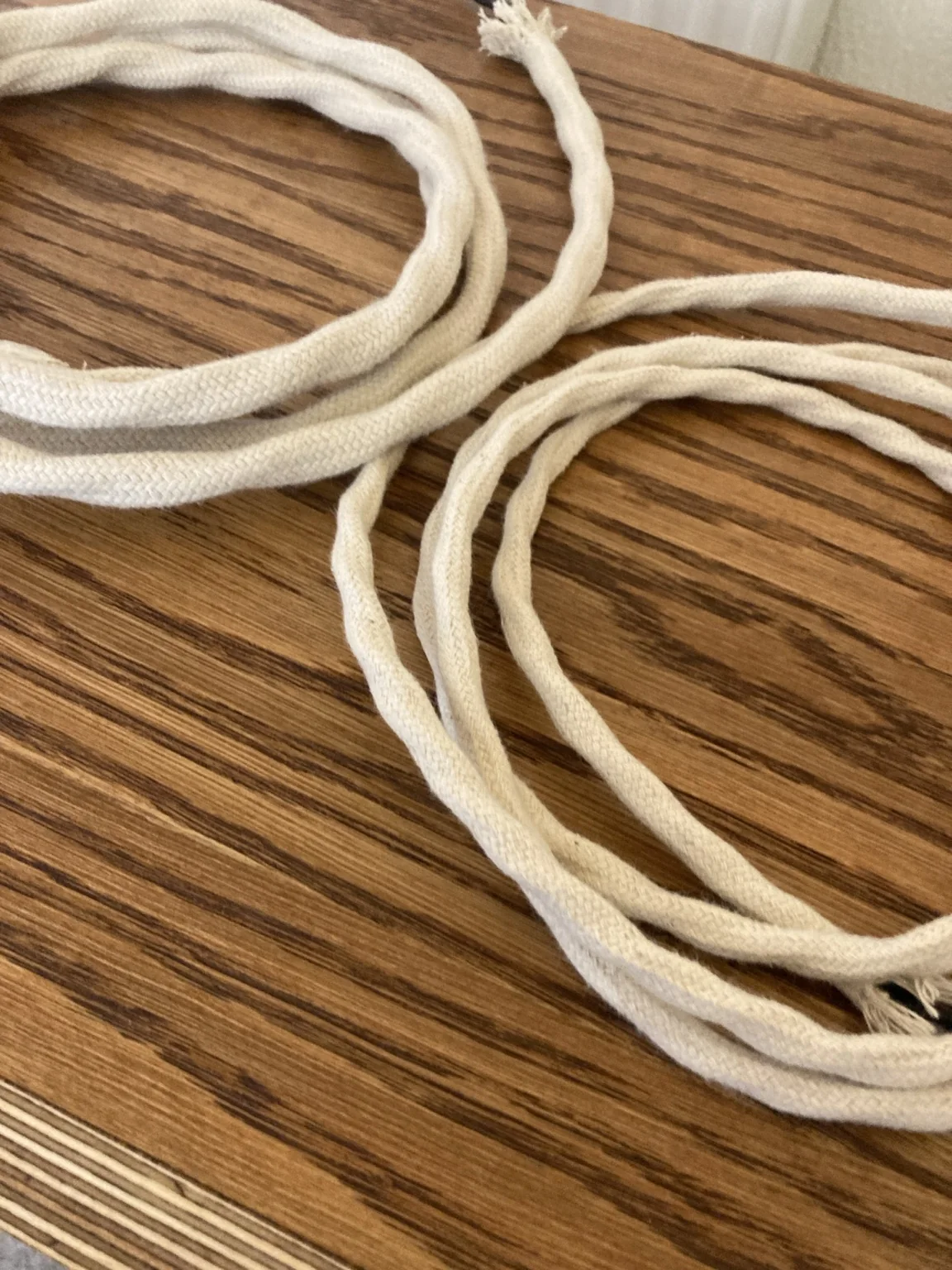
The internal cable is twisted by hand and wrapped in cotton to keep the geometry tight and stable. Drivers and crossover assemblies remain accessible so the loudspeaker can be serviced rather than discarded.
05 · Finishes
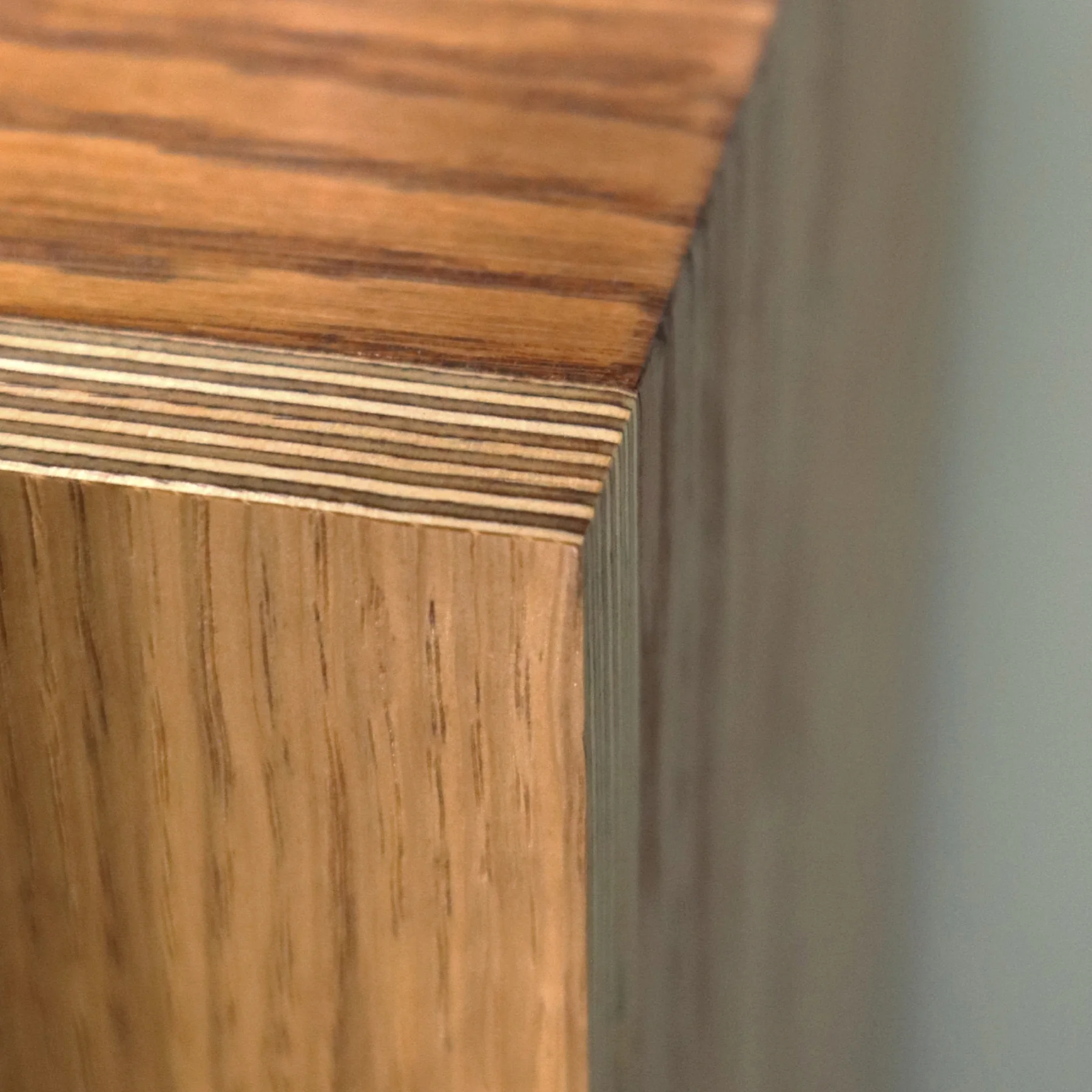
Cwen is built to order in selected real wood veneers. Customers can choose from approved veneers, colours from the stain range we use, and matt, satin or gloss final finishes.
The pair shown here combines a natural oak front with darker stained sides and visible layered edges. Other combinations are possible, but the acoustic design remains fixed.
Wood is a natural material. Grain and colour will vary, and an exact match to a screen image cannot be promised. That variation is part of the finished object.

06 · The studio
MÆRE grew from years around hi-fi, live sound, music equipment and loudspeaker building. The first complete design was Cwen. It was made because the market did not offer the combination of scale, finish and sound we were looking for at a sensible high-end price.
We are not trying to behave like a large manufacturer. The aim is a recognised range of carefully developed loudspeakers, supported directly and built without pressure to cheapen the parts that matter.
Future designs will cover different rooms and budgets, but they will share the same priorities: proper low-frequency performance, clear engineering, real materials and a sense of joy.
Cwen is available on enquiry. Each pair is specified, built, finished, tested and listened to before delivery.
Tell us about your room, system, music and preferred finish. We will be honest about whether Cwen is the right loudspeaker for you.
We confirm the finish, quotation, estimated lead time and delivery arrangements before work begins.
Typical build time is around five to six weeks, depending on specialist component lead times. Delivery and installation are quoted separately.
Pricing, finishes and demonstrations
Cwen is available on enquiry. Home demonstrations can be arranged with enough notice, subject to location and availability.